This spring has been busier than we expected, so while we originally planned to custom build a coop we ultimately decided to order one. Planning for chickens while living in an HOA has been a little tricky due to size restrictions, but I also know that we're lucky our HOA allows chickens at all!
We ended up ordering this coop from CCOnly.com:
By our calculations, our 3 girls should be fine in here, especially since we plan to get a portable run to use when we are outside with them. One of the things I like about this coop is that if we do end up deciding they need a larger run, we can add on an extension relatively easily.
Of course, since we back up to open space and we have seen coyotes, foxes, and hawks frequently, we will be predator-proofing. Our plan for that involves digging down and out about a foot, laying 1/4" hardware cloth (to prevent anything from digging up into the run, like rats, voles, etc), then building up a foundation of CMU blocks with hardware cloth along the sides. Then the coop base will sit on the CMUs, with the hardware cloth from the foundation coming up and connecting to the hardware cloth on the sides of the run. The trench will be filled back in, and I'm considering laying pavers along at least one side so that there's a solid place to stand in the winter when the yard can get muddy from snow melt. We also got solar powered predator deterrents that use little red lights to mimic eyes. I'll write more about those once we install them and I know if I like them or not!
The coop also must be painted to match the house (one of our HOA rules). The body of the coop will be the same gray-blue as our house, and the trim plus the framing around the run will be off-white.
So, that's the chicken coop plan right now. It's been a constantly evolving plan, since we originally planned to custom design, then the coop we originally planned to purchase from CCOnly went out of stock while we waited to get HOA approval, and now we're waiting for a weekend with no snow on the ground so that we can get the process started! I'm looking forward to learning from the whole process, and giving our little chickens a nice home in our backyard.
Showing posts with label garden. Show all posts
Tuesday, May 3, 2016
Tuesday, August 11, 2015
August Garden Progress
After a fairly rainy July, it's been hot and dry so far this August. In addition to using the drip sprinklers, I've been going out with the hose in the evenings to make sure the veggies get enough water -- and a chance to cool down after the very hot days!
I wouldn't say this is the most productive garden I've had, since our balcony container gardens were always extremely productive per square foot. But I've had a steep learning curve with gardening in CO, plus far more inconsistent weather patterns! We have had some gorgeous tomatoes though, and I'm looking forward to seeing what else is a success in the garden this year.
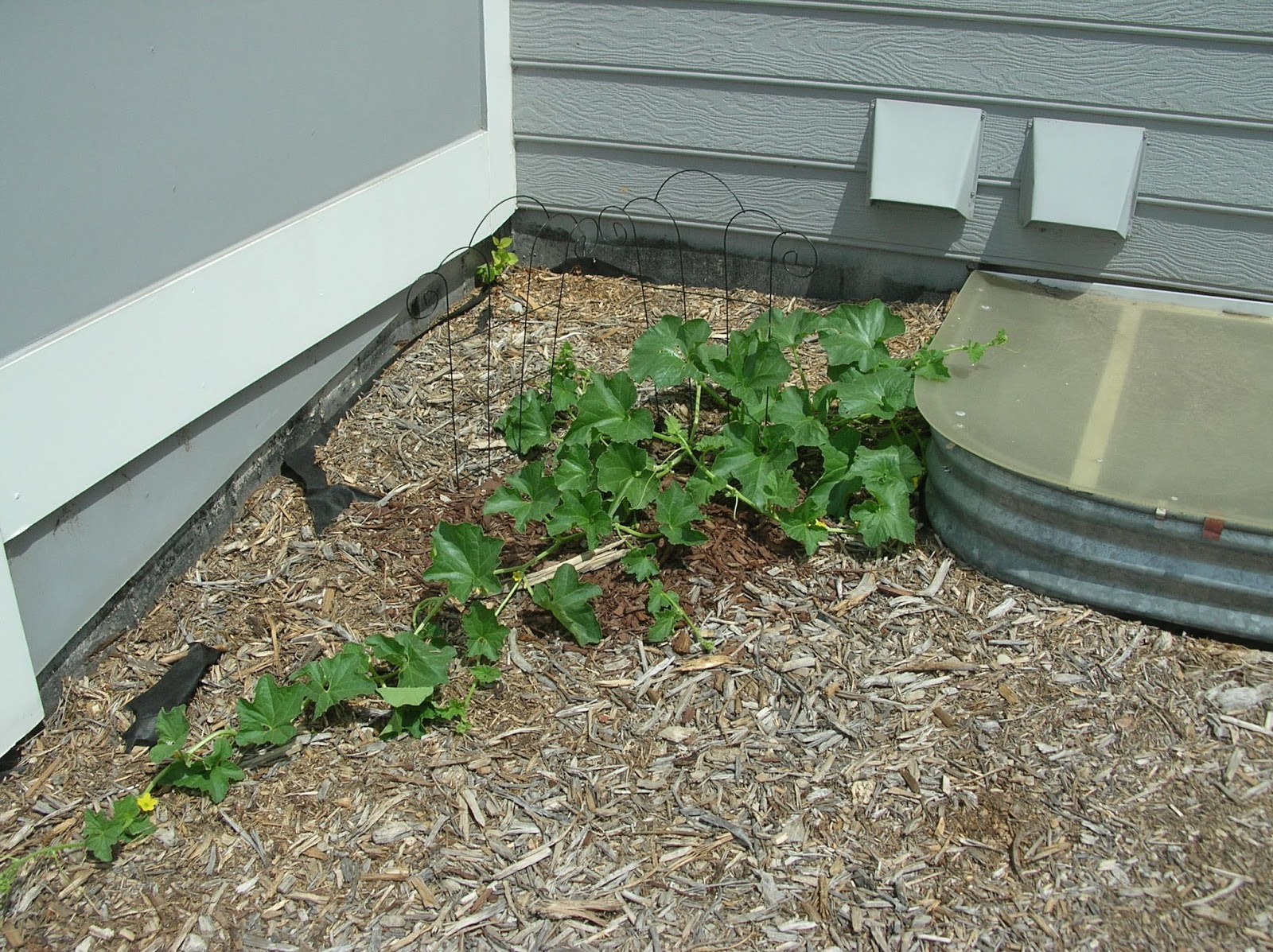
Melons on the outside of the breakfast nook. We've had lots of little flowers, but I can't tell if any melons are actually growing yet.
Corn and pumpkins growing along the back fence. I tried beans too, but so far they've all fried in the hot afternoon sun.
Baby pumpkin!
One set of potted tomatoes and marigolds. The marigolds help attract pollinators and make it pretty!
I had a bunch of volunteer sunflowers in one corner of the yard.
Our row of marigolds, tomatoes, peppers and eggplants along the side fence.
Black tomatoes
The eggplants had a very slow start, but suddenly they're growing and some have these little purple flowers. Maybe I'll have some successful eggplants after all?
I don't know what this perennial bush is, but it attracts a lot of bees so I like it!
We had some volunteer plants in the sandbox, and it turns out they're tomatillos! Since my current plan is to turn the sandbox into a raised bed anyway, I'm letting them grow where they are. We'll see if they're any good.
That's where we are with our garden. If you garden, what's growing well for you? And if any readers have advice for gardening on the Front Range I'd love to hear it!
I wouldn't say this is the most productive garden I've had, since our balcony container gardens were always extremely productive per square foot. But I've had a steep learning curve with gardening in CO, plus far more inconsistent weather patterns! We have had some gorgeous tomatoes though, and I'm looking forward to seeing what else is a success in the garden this year.
Melons on the outside of the breakfast nook. We've had lots of little flowers, but I can't tell if any melons are actually growing yet.
Corn and pumpkins growing along the back fence. I tried beans too, but so far they've all fried in the hot afternoon sun.
Baby pumpkin!
One set of potted tomatoes and marigolds. The marigolds help attract pollinators and make it pretty!
I had a bunch of volunteer sunflowers in one corner of the yard.
Our row of marigolds, tomatoes, peppers and eggplants along the side fence.
Black tomatoes
The eggplants had a very slow start, but suddenly they're growing and some have these little purple flowers. Maybe I'll have some successful eggplants after all?
I don't know what this perennial bush is, but it attracts a lot of bees so I like it!
We had some volunteer plants in the sandbox, and it turns out they're tomatillos! Since my current plan is to turn the sandbox into a raised bed anyway, I'm letting them grow where they are. We'll see if they're any good.
That's where we are with our garden. If you garden, what's growing well for you? And if any readers have advice for gardening on the Front Range I'd love to hear it!
Thursday, June 11, 2015
An HOA Compliant Compost Bin
You might remember that at our condo, I made a small vermicompost bucket for the balcony. While we didn't have enough space there to take care of all of our compostable waste, those worms definitely made a good dent in our garbage and they gave us a decent amount of great worm castings in return.
I wanted some taller, flowering perennials as well as some lower green. This area is in shade all day during the winter, and most of the day during the summer, so the plants couldn't require more than a couple hours of direct sunlight. At our local nursery we found one climbing hydrangea, two Camelot foxgloves, and a couple varieties of hosta. I filled in the front with some periwinkle ground cover.
A view that only people on our property will ever see: the actual compost bin. That window well isn't actually big enough to be a proper egress, so we weren't worried about putting the bin a couple feet away from it.
In our HOA, compost bins are required to be approved. The idea is that they can be unsightly or smelly, but if you're doing it right they really shouldn't be! But, because so much of our yard is visible from the road or open space (great views of the mountains for us, great views into our yard for everyone else) we decided to play by the book and submit a plan for a compost bin.
The location that seemed the best for us, and our neighbors, unfortunately was also the most visible from the road. My solution: hid the bin with fencing, and then plant some shade perennials in front. Since this area was just mulch and weeds before, I knew that they wouldn't say "no" to something that would actually make the area MORE attractive from the street.
And I was right! The Architectural Committee approved my plans, so then Sean and I just had to wait for a non-rainy weekend to actually get out there and install the bin, fencing and perennials. We did just that this past weekend.
I wanted some taller, flowering perennials as well as some lower green. This area is in shade all day during the winter, and most of the day during the summer, so the plants couldn't require more than a couple hours of direct sunlight. At our local nursery we found one climbing hydrangea, two Camelot foxgloves, and a couple varieties of hosta. I filled in the front with some periwinkle ground cover.
A view that only people on our property will ever see: the actual compost bin. That window well isn't actually big enough to be a proper egress, so we weren't worried about putting the bin a couple feet away from it.
Pretty foxgloves helping to hide the compost!
We're definitely looking forward to being able to use this compost bin to reduce our waste, and in future years we will reduce the amount of money we need to spend on amending the soil. It's a win-win!
Linked up to:
Waste Not Want Not Wednesday
****
Linked up to:
Waste Not Want Not Wednesday
Labels:
conservation,
design,
DIY,
garden,
home,
vermicompost,
wastenot,
zero waste
Wednesday, June 10, 2015
June Garden Progress
I know I keep talking about the adjustments in moving from California to Colorado, but wow it's been different learning to garden here! Sean and I used to have a fairly productive patio container garden that would last from early spring (March) to late fall (sometimes into November). Well, here it is totally different!
Our neighbors keep saying that the weather this year has been unusually wet and cold. We don't have anything to compare it to, but the average last frost date is around Memorial Day which seemed late to me! And this May was one of the wettest on record for our area, so between the cold, damp and potential for hail we didn't get a chance to get much planting done until the first weekend of June. And even so we lost some tomato starts, so I replaced them with sturdier starts from the local nursery. Here are some images of what we have growing in the garden:
The raspberry canes we put in this spring are leafing out. From what I've read we probably won't have a big raspberry harvest this year, but it should be better next year.
I think I've finally found a fence that deters the bunnies from chomping on my strawberries, but that I can still step over in order to get in there to weed and harvest! In this patch we have strawberry plants, spinach, and sugar snap peas up against the fence.
I have one hot serrano pepper in a pot.
This is the old raised bed from the previous owners. Next year I want to tear it out and replace it with an herb spiral that will look beautiful even in the winter. For now though, it is overgrown with mint!
I planted alternating tomatoes, bell peppers and eggplants along the fence line, with marigolds in between to attract pollinators and provide some beauty. The bunnies also seem to prefer the marigolds over the tomatoes, so I guess that's good?
Foxglove against the trellis hiding my compost bin -- more on that project tomorrow!
The perennial bushes are actually prettier than I was expecting!
The roses against the garage started growing again after a very violent pruning on my part.
The perennial beds in the front yard attract lots of bees!
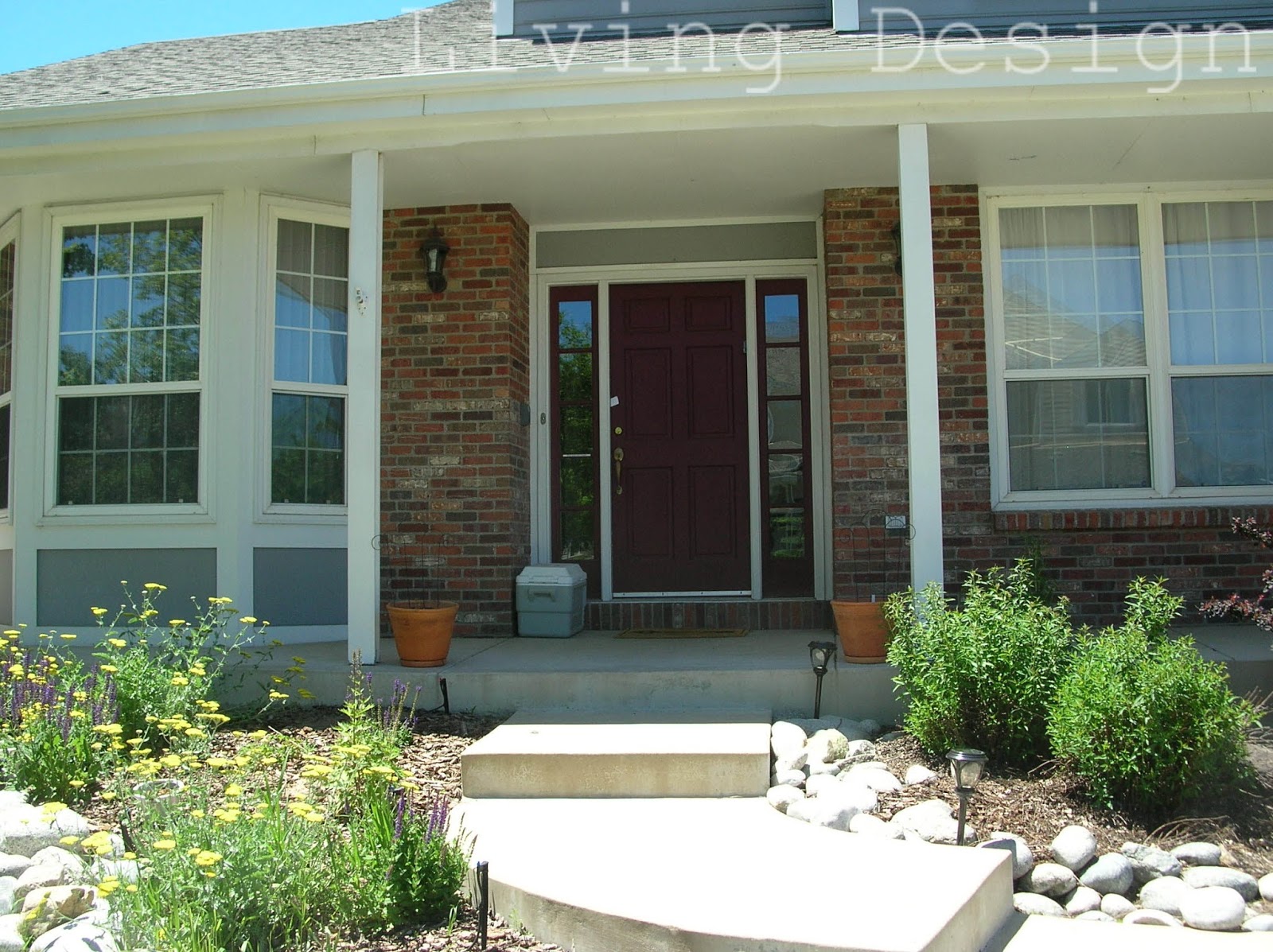
We placed some terra cotta pots with rosemary on either side of the front porch. An attractive way to sneak edibles into the front yard!
That's the current state of our yard. I'm looking forward to all of the vegetables and herbs really starting to grow and fill out. All that plain mulch has gotten pretty boring, I'm ready for a lush, edible landscape!
Our neighbors keep saying that the weather this year has been unusually wet and cold. We don't have anything to compare it to, but the average last frost date is around Memorial Day which seemed late to me! And this May was one of the wettest on record for our area, so between the cold, damp and potential for hail we didn't get a chance to get much planting done until the first weekend of June. And even so we lost some tomato starts, so I replaced them with sturdier starts from the local nursery. Here are some images of what we have growing in the garden:
The raspberry canes we put in this spring are leafing out. From what I've read we probably won't have a big raspberry harvest this year, but it should be better next year.
I think I've finally found a fence that deters the bunnies from chomping on my strawberries, but that I can still step over in order to get in there to weed and harvest! In this patch we have strawberry plants, spinach, and sugar snap peas up against the fence.
I have one hot serrano pepper in a pot.
This is the old raised bed from the previous owners. Next year I want to tear it out and replace it with an herb spiral that will look beautiful even in the winter. For now though, it is overgrown with mint!
I planted alternating tomatoes, bell peppers and eggplants along the fence line, with marigolds in between to attract pollinators and provide some beauty. The bunnies also seem to prefer the marigolds over the tomatoes, so I guess that's good?
Foxglove against the trellis hiding my compost bin -- more on that project tomorrow!
The perennial bushes are actually prettier than I was expecting!
The roses against the garage started growing again after a very violent pruning on my part.
The perennial beds in the front yard attract lots of bees!
We placed some terra cotta pots with rosemary on either side of the front porch. An attractive way to sneak edibles into the front yard!
That's the current state of our yard. I'm looking forward to all of the vegetables and herbs really starting to grow and fill out. All that plain mulch has gotten pretty boring, I'm ready for a lush, edible landscape!
Monday, April 27, 2015
#WasteNot 30 Day Challenge: Day 4
Today is my fourth day of the #WasteNot challenge, sponsored by Travel Well Magazine. Here's something that is making a difference in our yard waste:
Our new lawn mower!
Because we moved into this house right before the first snow, we've gotten away with very little yard work so far. But now that it's spring and the temperatures are above freezing, the grass is growing again so it was time to go buy a lawn mower. We don't have a ton of lawn, and we preferred not to get a gas powered one, so when this Fiskars reel mower was nearly 50% off at Sears we grabbed it!
How is it waste free? Well, it came with no packaging (it was either a return or discontinued, hence the mark down); it has no emissions and takes only human energy; and after mowing the clippings can either be left in place to add nutrients back into the soil or they can be raked and put in the compost bin.
****
Linked up to:
Waste Not Want Not Wednesday
Our new lawn mower!
Because we moved into this house right before the first snow, we've gotten away with very little yard work so far. But now that it's spring and the temperatures are above freezing, the grass is growing again so it was time to go buy a lawn mower. We don't have a ton of lawn, and we preferred not to get a gas powered one, so when this Fiskars reel mower was nearly 50% off at Sears we grabbed it!
How is it waste free? Well, it came with no packaging (it was either a return or discontinued, hence the mark down); it has no emissions and takes only human energy; and after mowing the clippings can either be left in place to add nutrients back into the soil or they can be raked and put in the compost bin.
****
Linked up to:
Waste Not Want Not Wednesday
Wednesday, April 22, 2015
#WasteNot 30 Day Challenge: Day 1
While I was gone for a wedding in NYC this last weekend, my awesome friend Ali started posting pictures of steps she takes towards a zero waste lifestyle on Facebook. She was tagging them with #wastenot, but since I was relying purely on my phone for internet it wasn't until today that I got to actually find out about the 30 day challenge she was doing, sponsored by Travel Well Magazine. That's a challenge I can get on board with! The official rules for the contest require a Facebook, Twitter or Instagram post, but I wanted to share on the blog as well. So, for the next 30 days I'll be sharing different ways I work to reduce my trash and make my footprint on the earth that much smaller.
To start off with, here's an exciting piece of mail we received:
Yep, we have approval to put in a compost bin!
Our HOA is pretty lenient compared to most, and I did get a little designer-nerdy and draw up very detailed VectorWorks plans of exactly what I plan to do. Since the best location for the compost bin is on the side of the house that faces the street, my proposal includes using lattice fencing to block it and then planting perennial shade-lovers in front. So hopefully in just a few short weekends of work we will have a compost bin and lattice up, and I will be able to toss almost all of our food scraps in there instead of in the garbage. Plus, by next summer (if not sooner) I'll have "free" compost instead of spending money on bags and bags of it at the store in order to amend our very sandy soil.
Do you compost? How else do you reduce waste? Join the 30 Day Challenge and post in the comments!
Monday, March 17, 2014
Conservation Monday #6: Why I Meal Plan
In the hectic existence that is a master's thesis, I missed my Conservation Monday post last week. Oops! I hope today's post makes up for it!
I want to break from my regular list format today and discuss in depth one of the ways I have practically eliminated food waste. I have accomplished this through the use of a fairly simple tool: the meal plan.
Some people have incredibly elaborate, detailed meal plans. Some plan an entire month's meals at once! This is not for me, because we prefer to eat with the seasons and are members of a fruit/veggie CSA as well as a meat CSA. I absolutely love my CSA memberships, as they encourage us to try new foods, eat all of our fruit and vegetable servings, eat locally and eat organically. The occasional downside is that we don't know the contents of the veggie box until the weekend before it arrives, and we don't know the contents of the meat box until I open it!
This element of surprise has led me to the following method:
When I get a box, I write down in the notes section of my planner ALL of the contents. I have a column for fruit, a column for vegetables, and a column for meat. (Since the meat arrives once a month and vegetables currently come every other week, I end up with more fruit and vegetable lists than meat lists)
The list looked like this in February after I opened our first meat box:
I write the week's plan in my planner and on a fridge calendar. I love that with the meal plan right there on the fridge, there's never a question of what to make for dinner!
Of course, then there are weeks like tech, when I'm not even home in the evenings to make dinner, and Sean gets cute with the "meal plan":
Won't have tech again for a while, as I finish this thesis. But at least I know he can handle the "meal planning" without me!
My meal planning system isn't perfect yet, and part of that has to do with spontaneity. Sometimes I plan something, but then we end up having a last minute dinner with friends. The meal plan gets shifted to accommodate, which is why if you read all of my meal plan posts you'll see certain meals carrying over into the next week.
We have also had a few times when I was supposed to make the new soup for "soup night" but I looked into the fridge and there was still leftover soup. I'm not making a whole new pot when there are still jars of leftovers sitting in the fridge, so it becomes an impromptu "leftovers" night.
Despite the couple kinks I'm still working out in our plan, we have cut food waste down to almost nothing. The worms get any kitchen scraps that aren't meat, dairy or citrus. It can take a long time now to ever fill up the kitchen garbage can, and it's a fairly small one to begin with! I'm very happy with the progress we've made, and I plan to keep working to reduce our waste even further as well as take all the stress out of dinner time!
Do you meal plan? What's your system? Share in the comments!
I want to break from my regular list format today and discuss in depth one of the ways I have practically eliminated food waste. I have accomplished this through the use of a fairly simple tool: the meal plan.
Some people have incredibly elaborate, detailed meal plans. Some plan an entire month's meals at once! This is not for me, because we prefer to eat with the seasons and are members of a fruit/veggie CSA as well as a meat CSA. I absolutely love my CSA memberships, as they encourage us to try new foods, eat all of our fruit and vegetable servings, eat locally and eat organically. The occasional downside is that we don't know the contents of the veggie box until the weekend before it arrives, and we don't know the contents of the meat box until I open it!
This element of surprise has led me to the following method:
When I get a box, I write down in the notes section of my planner ALL of the contents. I have a column for fruit, a column for vegetables, and a column for meat. (Since the meat arrives once a month and vegetables currently come every other week, I end up with more fruit and vegetable lists than meat lists)
The list looked like this in February after I opened our first meat box:
- ground beef
- ground pork
- ground lamb
- leg of lamb
- pork chops
- pork butt
- carrots
- artichokes
- romanesco
- lettuce
- kale
- shallots
- apples
- oranges
- lemons
- ground beef
ground pork- baked eggs & kale- ground lamb
leg of lamb- lamb tagine- pork chops
- pork butt
- carrots
- artichokes
- romanesco
- lettuce
kale- baked eggs & kale- shallots
- apples
- oranges
- lemons
I write the week's plan in my planner and on a fridge calendar. I love that with the meal plan right there on the fridge, there's never a question of what to make for dinner!
Of course, then there are weeks like tech, when I'm not even home in the evenings to make dinner, and Sean gets cute with the "meal plan":
Won't have tech again for a while, as I finish this thesis. But at least I know he can handle the "meal planning" without me!
My meal planning system isn't perfect yet, and part of that has to do with spontaneity. Sometimes I plan something, but then we end up having a last minute dinner with friends. The meal plan gets shifted to accommodate, which is why if you read all of my meal plan posts you'll see certain meals carrying over into the next week.
We have also had a few times when I was supposed to make the new soup for "soup night" but I looked into the fridge and there was still leftover soup. I'm not making a whole new pot when there are still jars of leftovers sitting in the fridge, so it becomes an impromptu "leftovers" night.
Despite the couple kinks I'm still working out in our plan, we have cut food waste down to almost nothing. The worms get any kitchen scraps that aren't meat, dairy or citrus. It can take a long time now to ever fill up the kitchen garbage can, and it's a fairly small one to begin with! I'm very happy with the progress we've made, and I plan to keep working to reduce our waste even further as well as take all the stress out of dinner time!
Do you meal plan? What's your system? Share in the comments!
****
Linked up to:
Saturday, February 15, 2014
Garden Update: February 2014
We have some new additions to our balcony garden! Sean and I helped some friends rehome fruit trees at a property scheduled to be bulldozed (sad, but yet so wonderful that the owners reached out to rehome the trees instead of just cutting them all down) and we came home with one blueberry bush, one rose and one gardenia.
The gardenia was a bit out of control for our narrow balcony (forgot to take a picture before I started pruning) and I read that they can do well indoors, so I was considering putting it in the living room. We were in line at Ikea, having found the perfect pot for our living room decor that wouldn't break the bank...and then we thought to double check whether or not gardenias are toxic to cats.
They are.
Bummer. No gardenias indoors for this household.
I guess this gardenia may need to go live in my parents' yard.
The blueberry, however, is happily potted next to my herb planter:
It's dormant right now of course, but I can't wait to see some growth. And then to pick fresh blueberries off our balcony...
Our other winter/spring plants are doing well. Here are some radishes:
Beets:
Lettuce:
And lastly, the new rose bush tucked away next to the lemon tree (dormant strawberry plant hanging over it)
The gardenia was a bit out of control for our narrow balcony (forgot to take a picture before I started pruning) and I read that they can do well indoors, so I was considering putting it in the living room. We were in line at Ikea, having found the perfect pot for our living room decor that wouldn't break the bank...and then we thought to double check whether or not gardenias are toxic to cats.
They are.
Bummer. No gardenias indoors for this household.
I guess this gardenia may need to go live in my parents' yard.
The blueberry, however, is happily potted next to my herb planter:
It's dormant right now of course, but I can't wait to see some growth. And then to pick fresh blueberries off our balcony...
Our other winter/spring plants are doing well. Here are some radishes:
Beets:
Lettuce:
And lastly, the new rose bush tucked away next to the lemon tree (dormant strawberry plant hanging over it)
Soon I'll be starting my tomatoes, beans and sugar snap peas. And of course our green onions continue to thrive at ridiculous sizes...I need to get a new picture of them up here because you probably wouldn't believe how big they are unless you saw them!
Do you grow a winter garden? What do you grow? Any helpful hints for container gardening? Share in the comments!
***
Linked up to:
Thursday, August 29, 2013
We Have Compost! Worm Update
I think it's time for an update on our super cheap DIY worm bin, don't you?
Despite some hiccups as we got the hang of maintaining the correct moisture level in the bins, we have had success! A couple months ago the first bin was getting pretty full, so we decided to rest it (that's when you stop adding new material so you force the worms to finish off everything that is in there and turn it into nice compost). I made a second worm bin (same method as my first) and transferred about two dozen worms in there so that we could keep composting our kitchen scraps while the first bin rested. I continued to turn the compost so that it didn't get too damp or packed down, but otherwise tried to leave the resting bin alone. And this past weekend, it looked done!
To sort out the useable compost and get the worms back into a worm bin to do more composting for us, I dumped the finished bucket into a large empty planter pot. Then, handful by handful, I put good stuff into another pot, things that need more time back into a worm bin, apricot pits that somehow made it in went to another pail (the worms can't eat them so they just take up space) and worms themselves got tossed back into the two worm bins.
Here's a nice fat worm:
Despite some hiccups as we got the hang of maintaining the correct moisture level in the bins, we have had success! A couple months ago the first bin was getting pretty full, so we decided to rest it (that's when you stop adding new material so you force the worms to finish off everything that is in there and turn it into nice compost). I made a second worm bin (same method as my first) and transferred about two dozen worms in there so that we could keep composting our kitchen scraps while the first bin rested. I continued to turn the compost so that it didn't get too damp or packed down, but otherwise tried to leave the resting bin alone. And this past weekend, it looked done!
To sort out the useable compost and get the worms back into a worm bin to do more composting for us, I dumped the finished bucket into a large empty planter pot. Then, handful by handful, I put good stuff into another pot, things that need more time back into a worm bin, apricot pits that somehow made it in went to another pail (the worms can't eat them so they just take up space) and worms themselves got tossed back into the two worm bins.
Here's a nice fat worm:
And here is some good compost being sorted:
Now we're letting the second bin rest, while we continue to feed worms in the first once again.
I'm very happy with how this experiment has been working out. I wish we had room for a larger worm bin, since especially on big canning days the worms can't handle all of our scraps. But it's certainly better than nothing, and these little guys divert the majority of our kitchen waste from the garbage, instead turning it into wonderful food for our veggie plants. And on a normal (non-canning) week, we really only need to take the kitchen garbage out if there's packaging from raw meat in there! I think this means that when either our complex gets green waste pickup, or we get a house with large compost capabilities, we will definitely be able to bring kitchen waste close to zero. Yay!
I'd love to hear from anyone who has experience with worm bins -- any great advice or stories? Please share!
***
Linked up to:
Frugal Days, Sustainable Ways at Frugally Sustainable
Waste Not Want Not Wednesday at Poor and Gluten Free
Wednesday, July 3, 2013
Summer Garden Update
It's been a while since I've posted about our balcony garden. The plants have grown so much since my last post!
When you first step onto the balcony from the living room, this pot of beans is to the left:
It doesn't get as much sun as other areas of the balcony, so it's a little slower at growing. But those big leaves take advantage of all the sun it gets!
Straight in front of the door is our deck box, which holds extra gardening tools and grill supplies. We have a few easily moveable pots sitting on top, like this pot of green onions:
These green onions were sprouted from the ends of some store-bought green onions back in December. I put the white ends with the roots into a short glass with water, and just changed out the water every couple days. I was able to keep them like that for a few months, just trimming off what I needed. But by late spring the onions were growing more than I could eat, so we had to plant them in a pot. And look how they've taken off! These are the thickest green onions I've ever seen, and they have a great flavor.
On the other side of the door, next to one of our chairs, is our other bean. This one gets more sun so has grown taller.
Moving along the rail now, we have two terra cotta pots with tomatoes. Our tomatoes got off to a rough start this year. I started them from seed, and our late spring storms wrecked havoc on their growing cycle. But now that it's consistently warm, they're really taking off. Maybe tomatoes to eat in another month or so? We'll see.
Next is our nasturtium, which I've shown before. This guy is great for adding a flowering aspect to the balcony, as well as a great addition to salads. And I just started my first batch of nasturtium capers, which I'm excited about (details to come)
Next to the nasturtium is our strawberry pot. We've had some lovely strawberries this season, though none were ripe when I snapped this picture:
Between the strawberry pot and the lemon tree is our lettuce. It's a bit scraggly right now, since the last of our first crop bolted and our second crop hasn't sprouted yet.
The lemon tree has grown a few inches since we brought it home in January! Above it is a hanging basket of strawberries, and behind it is our sugar snap pea. Wow it's tall!
Look at this mass of gorgeous snap peas!
Much of this spring has been devoted to testing out the micro-climates of our balcony. Since part of the rail is metal, and part is solid wood, we get very different sunlight for pots on the ground. The wind at the third floor level is also completely different than that at ground level, so what works for the people below might not work for us. A lot of trial and error, a lot of dead plants, but lots of rewarding home-grown food too!
When you first step onto the balcony from the living room, this pot of beans is to the left:
It doesn't get as much sun as other areas of the balcony, so it's a little slower at growing. But those big leaves take advantage of all the sun it gets!
Straight in front of the door is our deck box, which holds extra gardening tools and grill supplies. We have a few easily moveable pots sitting on top, like this pot of green onions:
These green onions were sprouted from the ends of some store-bought green onions back in December. I put the white ends with the roots into a short glass with water, and just changed out the water every couple days. I was able to keep them like that for a few months, just trimming off what I needed. But by late spring the onions were growing more than I could eat, so we had to plant them in a pot. And look how they've taken off! These are the thickest green onions I've ever seen, and they have a great flavor.
On the other side of the door, next to one of our chairs, is our other bean. This one gets more sun so has grown taller.
Moving along the rail now, we have two terra cotta pots with tomatoes. Our tomatoes got off to a rough start this year. I started them from seed, and our late spring storms wrecked havoc on their growing cycle. But now that it's consistently warm, they're really taking off. Maybe tomatoes to eat in another month or so? We'll see.
Next is our nasturtium, which I've shown before. This guy is great for adding a flowering aspect to the balcony, as well as a great addition to salads. And I just started my first batch of nasturtium capers, which I'm excited about (details to come)
Next to the nasturtium is our strawberry pot. We've had some lovely strawberries this season, though none were ripe when I snapped this picture:
Between the strawberry pot and the lemon tree is our lettuce. It's a bit scraggly right now, since the last of our first crop bolted and our second crop hasn't sprouted yet.
The lemon tree has grown a few inches since we brought it home in January! Above it is a hanging basket of strawberries, and behind it is our sugar snap pea. Wow it's tall!
Look at this mass of gorgeous snap peas!
Much of this spring has been devoted to testing out the micro-climates of our balcony. Since part of the rail is metal, and part is solid wood, we get very different sunlight for pots on the ground. The wind at the third floor level is also completely different than that at ground level, so what works for the people below might not work for us. A lot of trial and error, a lot of dead plants, but lots of rewarding home-grown food too!
Thursday, May 30, 2013
Dinner from the Garden
Lately we have been eating a lot of meals fresh from our balcony garden. This is my favorite way to eat in the summer, full of fresh seasonal flavors with little effort (or heat) in the kitchen. Add to that the fact that we've grown much of this ourselves, and it's pretty much the perfect meal.
Here's one of our simple homegrown meals:
Salad with mixed greens from the balcony (mixed lettuce, nasturtium leaves and parsley), tomatoes from the farmer's market, shredded chicken, topped with edible nasturtium flowers. And on the side, a slice of our homemade sourdough bread.
Here you can also see the ever evolving centerpiece of fresh fruit that I talked about here.
What are some of your favorite summer meals?
Here's one of our simple homegrown meals:
Salad with mixed greens from the balcony (mixed lettuce, nasturtium leaves and parsley), tomatoes from the farmer's market, shredded chicken, topped with edible nasturtium flowers. And on the side, a slice of our homemade sourdough bread.
Here you can also see the ever evolving centerpiece of fresh fruit that I talked about here.
What are some of your favorite summer meals?
Wednesday, April 3, 2013
Introducing our Worms
At long last, we have a way to dispose of our kitchen scraps that is NOT throwing them down the garbage chute! It's hard to reduce waste while living in a third floor condo - our county has a decent green waste program for single family homes, but it's not yet implemented for multi-family housing such as apartments or condo complexes. Until now, we've begrudgingly tossed our kitchen scraps into the garbage. But since nearly all of our garbage could be composted, it bothered me every time I tossed a bag down the garbage chute.
But then Sean and I learned about vermicompost. Worms (specifically, red wrigglers) will eat almost any kitchen scraps, as well as shredded newspaper and cardboard. Worm castings are some of the best all natural plant fertilizers around. Best of all, they don't take up very much space, making them an ideal solution for apartment or condo dwellers!
Before bringing the worms home, we had to get their bin set up. After doing some research on worm bins, we decided to keep costs down at the beginning and reuse an old cat litter bucket. Some vermicompost experts aren't fond of plastic as a home, but at this point we just don't have the resources or physical space to build anything out of wood. Maybe later down the road we'll upgrade the worm home. But we feel this is a good start, and an easy DIY project.
Here's the cat litter bucket we started with:
As you can see, we have a small collection of litter buckets on the balcony! They're useful for storing extra dirt, gardening tools, and even serving as planters as we slowly get nicer terra cotta pots. Part of the balcony has a solid wooden wall, and part has metal bars. We keep the pretty pots where the public can see them, and the functional but less attractive bins where they can't be seen.
First, I drilled some holes in the bottom for drainage. If you don't drill holes in the bottom, you can even keep worm bins indoors, but as we are doing this outside we decided to make sure there is good drainage.
Next, two rows of air holes at the top:
After the holes were drilled, I added shredded newspaper for the bedding. It needs to be damp for the worms, so I wet it using a spray bottle of water.
Then we added some small pieces of corrugated cardboard (about 3" x 3") and some dirt to act as grit.
Finally, we got to add the worms!
Getting settled into their new home! We can't wait to watch them turn our scraps into that amazing "black gold"!
Linking up to Frugal Days, Sustainable Ways
But then Sean and I learned about vermicompost. Worms (specifically, red wrigglers) will eat almost any kitchen scraps, as well as shredded newspaper and cardboard. Worm castings are some of the best all natural plant fertilizers around. Best of all, they don't take up very much space, making them an ideal solution for apartment or condo dwellers!
Before bringing the worms home, we had to get their bin set up. After doing some research on worm bins, we decided to keep costs down at the beginning and reuse an old cat litter bucket. Some vermicompost experts aren't fond of plastic as a home, but at this point we just don't have the resources or physical space to build anything out of wood. Maybe later down the road we'll upgrade the worm home. But we feel this is a good start, and an easy DIY project.
Here's the cat litter bucket we started with:
As you can see, we have a small collection of litter buckets on the balcony! They're useful for storing extra dirt, gardening tools, and even serving as planters as we slowly get nicer terra cotta pots. Part of the balcony has a solid wooden wall, and part has metal bars. We keep the pretty pots where the public can see them, and the functional but less attractive bins where they can't be seen.
First, I drilled some holes in the bottom for drainage. If you don't drill holes in the bottom, you can even keep worm bins indoors, but as we are doing this outside we decided to make sure there is good drainage.
Next, two rows of air holes at the top:
After the holes were drilled, I added shredded newspaper for the bedding. It needs to be damp for the worms, so I wet it using a spray bottle of water.
Then we added some small pieces of corrugated cardboard (about 3" x 3") and some dirt to act as grit.
Finally, we got to add the worms!
Getting settled into their new home! We can't wait to watch them turn our scraps into that amazing "black gold"!
Linking up to Frugal Days, Sustainable Ways
Subscribe to:
Posts (Atom)